Showing posts with label Press Association Training. Show all posts

Friday, 9 December 2011

Well done Newcastle ... officially the best

I raised a glass with colleagues at Press Association Training this week after the Newcastle journalism foundation course was named the best in Britain. The training centre, based in the Journal and Chronicle offices, was awarded the top spot ahead at the NCTJ's annual Skills Conference at Belfast City Hall. Trainee journalists on the PA course achieved an impressive and unprecedented 92pc exam pass rate. It's the third time in four years the course has clinched a top place, but the first time it has achieved the overall number one spot. None of this comes as any great surprise to me. The course has always been first rate, mainly because it sticks to the following tried and tested principles:
i) The centre is run as a newsroom with the same disciplines, dress code and long hours.
ii) All of the journalism training is carried out by professional, working journalists.
iii) The course concentrates on the basics - shorthand, writing, bringing in stories and law.
iv) The trainees are given detailed feedback on all of their work. 
v) As the centre is in a newspaper office the trainees get experience working for big city dailies.
Former trainees include the Andrew Marr, James Naughtie, Financial Times editor Lionel Barber and The Sun's political editor Tom Newton Dunn.
Ultimately, of course, training is only as good as the people who deliver it. So well done to Paul Jones, Pat Hagan, Garry Willey, David Banks, Sue Nixon, Shirley Kelly and, of course, head of PA Training Tony Johnston. Richly deserved. If you are want to know more, the course's details are here.

Thursday, 20 January 2011

Outlining the case for shorthand

Photo: Press Gazette

Two interesting snippets are doing the rounds this week that show shorthand is still thriving at journalism training centres. First there is this quite brilliant short video Why I love Teeline posted by Julie Starr on the Evolving Newsroom and brought to my attention by @danbloom1Then there is the story of Anneka Masish, a journalism student at Staffordshire University, who has shown her devotion to her craft by having her name tattooed on her leg ... in Teeline.
Shorthand, or more specifically Teeline, has played a big part in my life. First there were my experiences, as a trainee, in Mrs Mawston's sitting room in Whitley Bay every Wednesday afternoon.
Then, when I ran courses in Hastings, gaining 100 words per minute was essential. Some trainees were told by their editors 'don't come back unless you get it.' You can imagine the pressure. The brilliant Sylvia Bennett delivered 75-minute sessions first thing every morning followed by another hour from midday to 1pm. She had a great success rate. She still does, running the shorthand on PA Training foundation course in London as does her counterpart Susan Nixon in Newcastle. But it was shorthand that dominated the last days of the course as the pressure mounted. It was shorthand that caused tears and distress. No matter how good you were at bringing in stories or penning a readable feature, if you failed shorthand your editor would be unhappy. One editor asked me to pass on this message and we put it up on the noticeboard: "If you don't have shorthand you are a liability in my newsroom. I can't send you to court or council and, in a small team, you will need to slope off for extra lessons when you should be out gathering stories. My message is simple. Get your shorthand at Hastings or don't come back." 
It always struck me that some good people were lost to journalism because of this. It is also unfair. National newspapers are littered with big name writers who have never been near a Pitman or Teeline class. Nevertheless, the industry insists shorthand is still an essential requirement. I interview trainees for the Daily Mail and you are unlikely to get over the first hurdle if you don't have  shorthand (and a driving licence). At a student conference last year Graham Dudman, managing editor of The Sun, told delegates: “Number one is shorthand. I want to know that you can write shorthand at 100wpm.”  Apart from being a required tool having shorthand also adds to your professionalism. I recall the judge who, having studied a reporter's shorthand note, advised the jury that this was not a hack but a professional man. Then there was the case of England Football manager Glenn Hoddle being interviewed by Matt Dickinson of The Times. Hoddle told Dickinson that he believed disabled people and others were being punished for their sins in a former life. In the argument that followed Dickinson's professional shorthand note was critical ... both to his reputation and Hoddle's future. 
I know we can use tapes - but not always. Here's Kim Fletcher, chairman of the NCTJ, on the Today programme: “If you have a shorthand note you can find the quote very quickly. You go in with a tape recorder, or a digital recorder, and if you’ve spent an hour in there with your recorder you’ve got an hour of tape to go through, that takes quite a long time.” Journalism is changing rapidly of course and in a world of social media, video, forums, blogs,  and the like - not everyone will need to write at 100wpm.
For now though, if you are studying journalism you should learn to drive, build up a stunning portfolio, pass your law exam and GET YOUR SHORTHAND.            

Thursday, 21 October 2010

Farewell to 'young lions' of the Daily Telegraph

A post course drink with the Telegraph trainees: From my left - Donna, trainer Mike Watson, Raf, Sarah with the Champagne, Matthew and Emily. Josie escaped early. 

How daunting is this? As a trainee journalist, you have three days to come up with three ideas for new Daily Telegraph sections, write them, design the publications, the websites and the apps, make them profitable, deliver a marketing strategy and present it all in the boardroom to the paper's senior executives. That's what the Telegraph's trainees did this week as a culmination of their seven-week course with Press Association Training.  And what a professional job they did too. Donna Bowater, Josie Ensor, Emily Gosden, Matthew Holehouse, Sarah Rainey and Raf Sanchez are now off to PA and regional papers in Liverpool, Cardiff and Glasgow to get down to their day jobs as reporters. Next year, their training complete, they will be back at the Telegraph. Before they left they had one more daunting task - the final newsquiz. Well done to Matthew Holehouse for an impressive weekly total of 17 points. Sarah Rainey was the star, though, winning the champagne for consistently brilliant results over the seven weeks and finishing with 98 points, 14 ahead of Matthew in second place. Good luck to them all. See how you do. Seventeen out of 23 to beat.

Newsquiz October 22
1. What is the name of the charity offering £200 to drug addicts if they have a vasectomy?
2. Chilean President Sebastian Pinera gave David Cameron a piece of rock and in return Cameron gave the president 33 bottles of Real Ale and a book. What was the title of the book?
3. What is the real name of the stately home where Downton Abbey is filmed?
4. Which airport was blockaded as part of the ongoing French protests?
5. Britain currently has two operational aircraft carriers. One is Ark Royal, name the other.
6. Name the two aircraft carriers that will be built to replace them (one point for each).
7. Which RAF base is to close after the Government cancelled orders for the new Nimrod aircraft?
8. Which British wildlife animal is back from the brink of extinction with its numbers increasing tenfold in 30 years. For a bonus point name the only English county where this creature has not returned.
9. What discovery has spurred Japan's foreign ministry to order a round of belt-tightening? 
10. The TV licence has been frozen for 6 years, how much does it cost?
11. To which hospital was Margaret Thatcher admitted?
12. The pension age for men and women is to go up to 66. In which year will the changes take effect?
13. The outgoing director general of the CBI, Richard Lambert, described the Government's cuts as painful but essential. Before joining the CBI which newspaper did Lambert edit?
14. The TUC was less than enthusiastic about the Government's cuts ... who is the TUC General Secretary?
15. Julian Assange, the founder of Wikileaks, has been denied a residence permit by which country?
16. What has been credited with helping poetry make a comeback in schools?
17. A product favoured by country folk is in short supply following a lorry hijack on the M62. What is it?
18. Why did seven secret servicemen burst into Nigella Lawson's kitchen?
19. Why were A-Team characters BA Baracus, the Face and Murdock in the news?
20. Who won best newcomer in the Mobo awards? And, for a bonus, what does Mobo stand for?


Friday, 21 May 2010

What skills will you need to thrive?

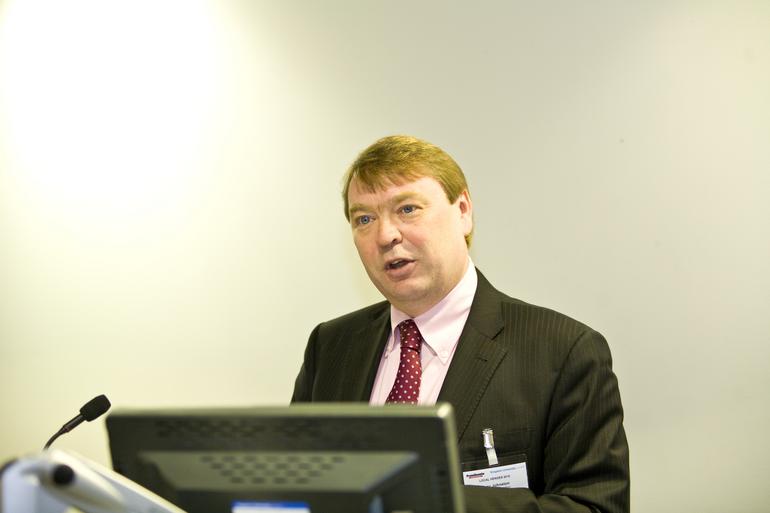
What skills does the modern journalist need? Well, on some papers, The Sun and News of the World for example, the ability to turn in a well-told tale at speed and have the rat-like cunning to bring in regular exclusives is still enough. I have just finished interviewing trainees for the Daily Mail where we were looking primarily for writing skills, ideas, toughness and self-motivation. But elsewhere, particularly in the regions and at papers such as the Telegraph, print journalists have had to develop new multimedia skills in video, podcasting and even broadcasting. My colleague Tony Johnston (above), who heads up Press Association Training, was one of the speakers at yesterday's Westminster Media Forum, where he outlined the skills he believes tomorrow's journalists will require. These include:
  • Numeracy to allow better use of freely available data
  • Technology to allow journalists to control the means of digital production
  • Enterprise skills to help find ways of making journalism pay
You can read what he said in the Press Gazette and on the Pencil Sharpener. 
I have long believed that some journalists will also need to develop a database mentality and to understand how marketing works. It is crucial though that the new skills do not dilute the essential role of the journalist - there is no substitute for original and interesting content. Anyway, as a result of all of this, Press Association Training is developing a new range of courses and adapting some of our existing programmes to ensure that trainee and established journalists can gain the skills they need. Your contribution to this would be appreciated. You can leave ideas here or on the Press Association Training blog, the Pencil Sharpener, or email me on petersands@mistral.co.uk.
Other posts about yesterday's forum include:

Thursday, 13 May 2010

Applying for a job in journalism? Read this

Just finished interviewing for the Daily Mail reporters' training scheme at Northcliffe House. More than 900 applicants whittled down to 40, then 14 and finally 7. My colleagues have also finished recruiting for the sub-editing scheme and have selected five would-be Mail PJs. Congratulations to all. I will see them all again in August and September when the training schemes begin at Press Association Training's Manor House in Howden.
One thing that struck me through the recruitment though, was how many people fall short in their CVs and even in their interviewing techniques. So, I thought it might be useful to share some do's and don'ts when putting together your application.

Tuesday, 16 February 2010

London course for Press Association Training

Press Association Training is setting up a second foundation course for journalists. The Newcastle course will continue but there is to be a parallel course in London. Makes sense. Details on the Pencil Sharpener.