Anyone who has ever been on one of my courses will be familiar with the story of the murder of planning officer Harry Collinson in Butsfield, County Durham. It was the most remarkable day during my time as an editor. The story revolved around a bungalow that had been built, without planning permission, by an eccentric maverick called Albert Dryden. Derwentside District Council decided that the bungalow had to be demolished and Mr Collinson turned up to oversee it. While the bulldozer was preparing to break through the fence, Dryden went off to a caravan and returned wearing a gunbelt and holster with a First World War revolver. He walked up to the fence, took the gun out of the holster and shot Mr Collinson dead. He also shot and injured BBC reporter Tony Belmont and PC Stephen Campbell. Northern Echo photographer Mike Peckett took an astonishing set of photographs, recording the whole event on film. We ran them across Page 1 in a sequence (above left). It happened exactly 20 years ago today but the pictures are still as shocking now as they were then. The news-editor of The Northern Echo that day was Peter Barron, and he clearly hasn't forgotten it either. He is now the paper's editor and today ran an interview with Mr Collinson's brother (above right) and a first person piece by Mark Summers (below), the reporter who covered the story for the Echo. It's a considered and sensitive article that tells the shocking events of the day in detail. It all vividly brings back the way the day unfolded and the decisions we made. And if it sends a chill down my spine, I can't begin to imagine what effect it has on those who were there ... or on Harry Collinson's family.
Monday, 20 June 2011
The Dryden shootings: 20 years on
Anyone who has ever been on one of my courses will be familiar with the story of the murder of planning officer Harry Collinson in Butsfield, County Durham. It was the most remarkable day during my time as an editor. The story revolved around a bungalow that had been built, without planning permission, by an eccentric maverick called Albert Dryden. Derwentside District Council decided that the bungalow had to be demolished and Mr Collinson turned up to oversee it. While the bulldozer was preparing to break through the fence, Dryden went off to a caravan and returned wearing a gunbelt and holster with a First World War revolver. He walked up to the fence, took the gun out of the holster and shot Mr Collinson dead. He also shot and injured BBC reporter Tony Belmont and PC Stephen Campbell. Northern Echo photographer Mike Peckett took an astonishing set of photographs, recording the whole event on film. We ran them across Page 1 in a sequence (above left). It happened exactly 20 years ago today but the pictures are still as shocking now as they were then. The news-editor of The Northern Echo that day was Peter Barron, and he clearly hasn't forgotten it either. He is now the paper's editor and today ran an interview with Mr Collinson's brother (above right) and a first person piece by Mark Summers (below), the reporter who covered the story for the Echo. It's a considered and sensitive article that tells the shocking events of the day in detail. It all vividly brings back the way the day unfolded and the decisions we made. And if it sends a chill down my spine, I can't begin to imagine what effect it has on those who were there ... or on Harry Collinson's family.
Friday, 10 June 2011
Make mine an Oxford Mail ....
Here's a nice one to end the week on. Juxtaposition in newspapers is a regular occurrence but I don't think I have seen seen two bills causing a problem before. The Abingdon Herald wins on moral grounds of course - but I know which one would make me buy the paper. Speaking of which ...
Saturday, 4 June 2011
Only walk of life where the orgasm comes first
And so to drop intros. I remember the earliest advice I was given on intros by my first editor, the inimitable Robin Thompson. On my third day as a trainee at the Shields Weekly News I walked into the newsroom, sporting my shiny new John Collier suit, to see one of my intros hand-written on a flipchart. It was 47 words of English graduate prose. Any hope that it was there as an example of sublime writing evaporated when the editor subbed it in front of me and, horrors, my colleagues. "Aye, Peter ... it's bloody rubbish," he began in his broad Geordie before publicly crossing out the source, the bureaucratic language, the subordinate clause and the duplicated words. The result was a pithy 16-word summary of my story. "Remember Peter, this is newspapers," he advised. "The only walk of life where the orgasm comes first."
Great advice which has stayed with me forever.
Of course occasionally there is another way of telling a story. The drop intro, or delayed drop, once used almost exclusively in features, now often (in many American newspapers, too often) finds its way into news stories. The intention is to create a little suspense, dramatic effect or even humour by having the twist in the third or fourth sentence. I find myself teaching people to write drop intros more and more - not least because I help run the trainee reporters' course for the Daily Mail, one of the biggest exponents of drop intros (here's an example). The best advice, though, is to use them sparingly. A good drop can be very effective on the right story but too many are forced, particularly on hard news stories. You cannot began stories with: "When Peter Sands left home for his routine drive to work yesterday morning, little did he know what lay ahead ..." and then have some enormous tragedy in paragraph four. But you would be surprised how many trainee reporters think they can.
Anyway, I am always on the look out for good and bad examples. So it was nice to hear from old colleague Alan Cleaver (above), erstwhile editor of the Hampshire Chronicle and deputy editor of the Whitehaven News, who dropped me an email this week saying: "I stumbled across the best 'drop intro' of all time last night while doing some local history research. It concerns a small fire in a photographer's studio in Whitehaven in 1923."
The Whitehaven News, Thursday June 21, 1923
Whitehaven Studio Destroyed
Like the anguished wail of a tortured soul, only more so, the Whitehaven buzzer suddenly shattered the midnight silence of Friday night into innunmerable fragments, more or less. Its eldritch screeches eddied and swirled in the innocent ether; echoing and ricocheting from a thousand chimney pots, snarling their strident summons, bidding the dauntless fire-fighters to their nocturnal task.
Mingling with its brazen clamour varying from a hysterical crescendo of command to an almost sibilant sob of appeal, came the sudden monotonous "tap tap" upon the pavements of a myriad steel-shod clogs
while the softer stamp of hurrying leather-clad feet, and the quiet swish of unfastened laces formed a piano accompaniment to this pedestrian cacophony.
(and so it goes on, but I won't!)
Simply brilliant! All good or bad examples gratefully received on petersands@mistral.co.uk.
Great advice which has stayed with me forever.
Of course occasionally there is another way of telling a story. The drop intro, or delayed drop, once used almost exclusively in features, now often (in many American newspapers, too often) finds its way into news stories. The intention is to create a little suspense, dramatic effect or even humour by having the twist in the third or fourth sentence. I find myself teaching people to write drop intros more and more - not least because I help run the trainee reporters' course for the Daily Mail, one of the biggest exponents of drop intros (here's an example). The best advice, though, is to use them sparingly. A good drop can be very effective on the right story but too many are forced, particularly on hard news stories. You cannot began stories with: "When Peter Sands left home for his routine drive to work yesterday morning, little did he know what lay ahead ..." and then have some enormous tragedy in paragraph four. But you would be surprised how many trainee reporters think they can.
Anyway, I am always on the look out for good and bad examples. So it was nice to hear from old colleague Alan Cleaver (above), erstwhile editor of the Hampshire Chronicle and deputy editor of the Whitehaven News, who dropped me an email this week saying: "I stumbled across the best 'drop intro' of all time last night while doing some local history research. It concerns a small fire in a photographer's studio in Whitehaven in 1923."
The Whitehaven News, Thursday June 21, 1923
Whitehaven Studio Destroyed
Like the anguished wail of a tortured soul, only more so, the Whitehaven buzzer suddenly shattered the midnight silence of Friday night into innunmerable fragments, more or less. Its eldritch screeches eddied and swirled in the innocent ether; echoing and ricocheting from a thousand chimney pots, snarling their strident summons, bidding the dauntless fire-fighters to their nocturnal task.
Mingling with its brazen clamour varying from a hysterical crescendo of command to an almost sibilant sob of appeal, came the sudden monotonous "tap tap" upon the pavements of a myriad steel-shod clogs
while the softer stamp of hurrying leather-clad feet, and the quiet swish of unfastened laces formed a piano accompaniment to this pedestrian cacophony.
(and so it goes on, but I won't!)
Simply brilliant! All good or bad examples gratefully received on petersands@mistral.co.uk.
International Herald Tribune revisited
Sixteen years ago my old company the Editorial Centre did some design work for the International Herald Tribune in Paris. We added white space, colour, factfiles and graphics to the business travel section, only to be told it was 'too interesting'. It was out of step with the rest of the paper and we did a second set of pages that were basically long text reads, tight typography and small black and white pictures. So it was interesting to pick up a copy recently and see a fresh design with white space, artwork, lots of entry points, graphics and strong images. I guess we were just ahead of our time. The new design was actually carried out a year or two ago by Miguel Buckenmeyer. Very stylish. Take a look at it here.
Saturday, 28 May 2011
Two excellent anniversary ideas
What a great idea to celebrate The Guardian's 190th anniversary. The news stripped bare and all on one page, just like my Tweetdeck. Have we come full circle in news presentation? Could catch on. I see a rich vein of design consultancies ahead. Meanwhile there's another great anniversary idea over at the Independent. Ninety Prince Philip gaffes to celebrate his 90th birthday. Laugh out loud stuff.
A couple of examples: "It looks as though it was put in by an Indian." The Prince's verdict of a fuse box during a tour of a Scottish factory in August 1999. He later clarified his comment: "I meant to say cowboys. "I just got my cowboys and Indians mixed up."
"If it has four legs and it is not a chair, if it has got two wings and it flies but is not an aeroplane and if it swims and it is not a submarine, the Cantonese will eat it." Said to a World Wildlife Fund meeting in 1986.
A couple of examples: "It looks as though it was put in by an Indian." The Prince's verdict of a fuse box during a tour of a Scottish factory in August 1999. He later clarified his comment: "I meant to say cowboys. "I just got my cowboys and Indians mixed up."
"If it has four legs and it is not a chair, if it has got two wings and it flies but is not an aeroplane and if it swims and it is not a submarine, the Cantonese will eat it." Said to a World Wildlife Fund meeting in 1986.
Tuesday, 24 May 2011
Stop press - cat hops into delivery van
Thanks to David Bailey @surferdwb for sending me this bill from Norwich and for asking "I wonder how many extra copies of the paper this sold?" If the non-story theory works on print as well as on the web, it probably sold thousands. For more weird and wonderful bills and my tips on how to write good ones have a scroll through the training tips here.
Footballing weekend pays off
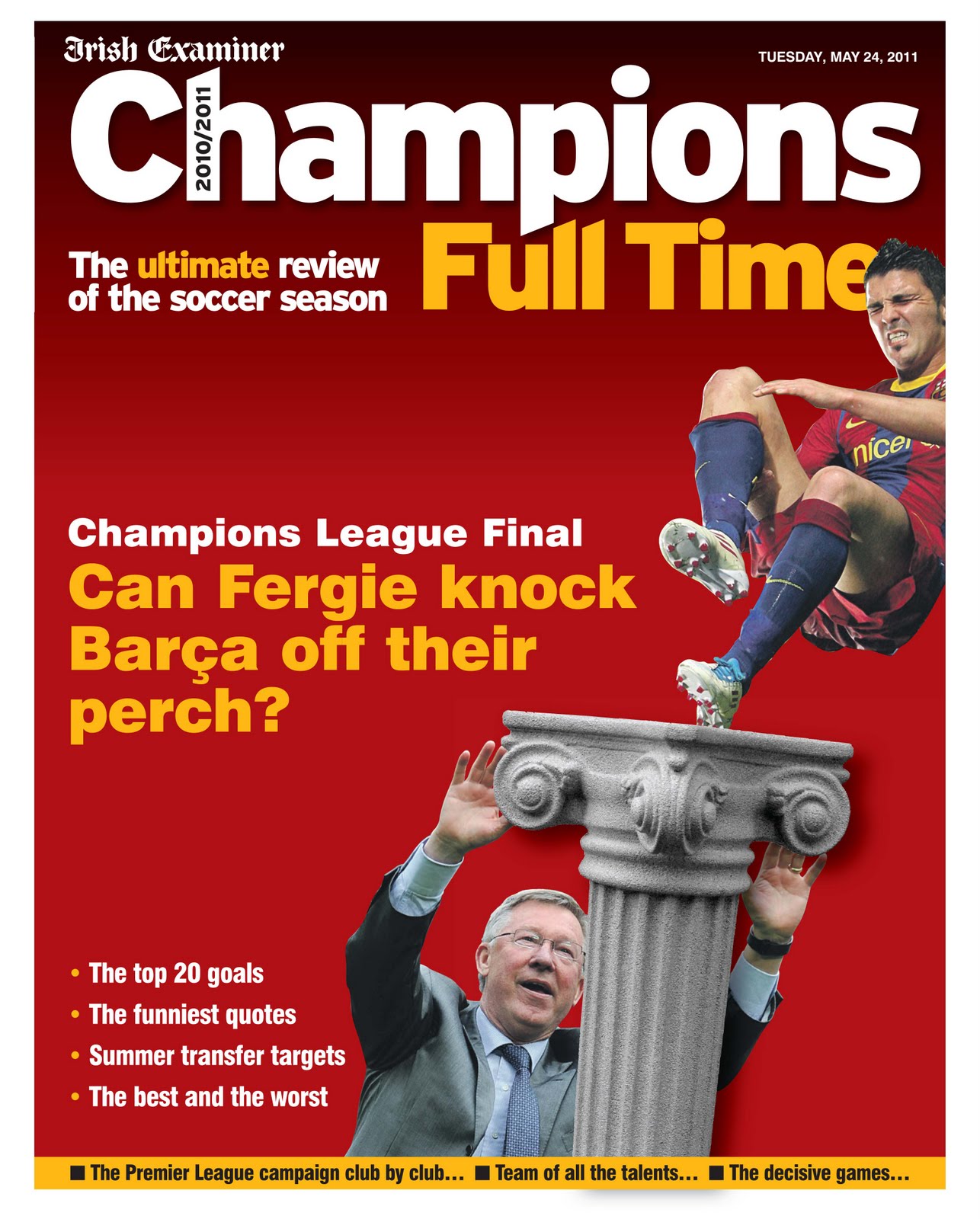
It's been a real footballing weekend for me ... working with Allan Prosser, Mike Brough and Paul Wick to produce a 56-page Champions Full Time supplement for the Irish Examiner. It is published today, free with the paper. Great fun to do but I could have done without the relegation issues on Sunday. I had taken a gamble that Wigan would go down and Birmingham would stay up, so apart from updating every Premier League club's page I had to set about on two major rewrites. Then Carlo Ancelotti was sacked. We made the deadline though. It marks another fantastic commitment by the Examiner to sports coverage. The supplement includes a club by club analysis, the best quotes, the top 20 goals, the worst fouls and howlers and a 12-page Champions League preview. It's a great read. Above are a few pages, including the cover and my review Newcastle's season. If you are a footballer fan, try to get hold of a copy. I can guarantee it will be worth it.
Sunday, 15 May 2011
Book to 'celebrate' quirky local paper stories
Local newspaper editors have been receiving letters from Viking Books in the last few weeks asking for permission to use their 'quirkiest, oddest and most locally-specific headlines and articles'. The idea, says Viking, is to celebrate the most 'local' side of local journalism in all its glory. 'The tone will be warm and even reverential rather than mocking.' Of course it will. The title is Whitstable Mum in Custard Shortage - after the excellent non-story highlighted here last year. Also included is Mattress falls off truck into Kidderminster Road. I hope they have tracked down the Harrogate Advertiser's Straight banana drama. Another contender emerged this week concerning the owners of a parrot called Seve Ballesteros paying tribute to the golfer following his death. It looks like the publishers have found some crackers we haven't seen before - such as 'Man found nailed to bench,' 'Tributes as popular Lichfield cat dies' and 'Mass poisoning in donkey soup war'. The book is out on October 13 and costs £9.99 in hardback ... although you can pre-order from Amazon for £8.99. One for the Christmas list.
Subscribe to:
Posts (Atom)